
Latest Enhancements and Features Introduced in the versions of Red Hat OpenShift Container Platform.
TABLE OF CONTENTS :
- What's new in Red Hat OpenShift Container Platform
- New capabilities to improve developer productivity
- OpenShift Pipelines 1.17 based on Tekton
- OpenShift GitOps 1.15 based on Argo CD 2.13
- OpenShift Serverless 1.35 based on Knative 1.15
- OpenShift Service Mesh 3.0 based on Istio 1.24 and Kiali 2.1
- Red Hat OpenShift Container Platform 4.18
- Red Hat OpenShift Container Platform 4.17
- Red Hat OpenShift Container Platform 4.16
- Red Hat OpenShift Container Platform 4.15
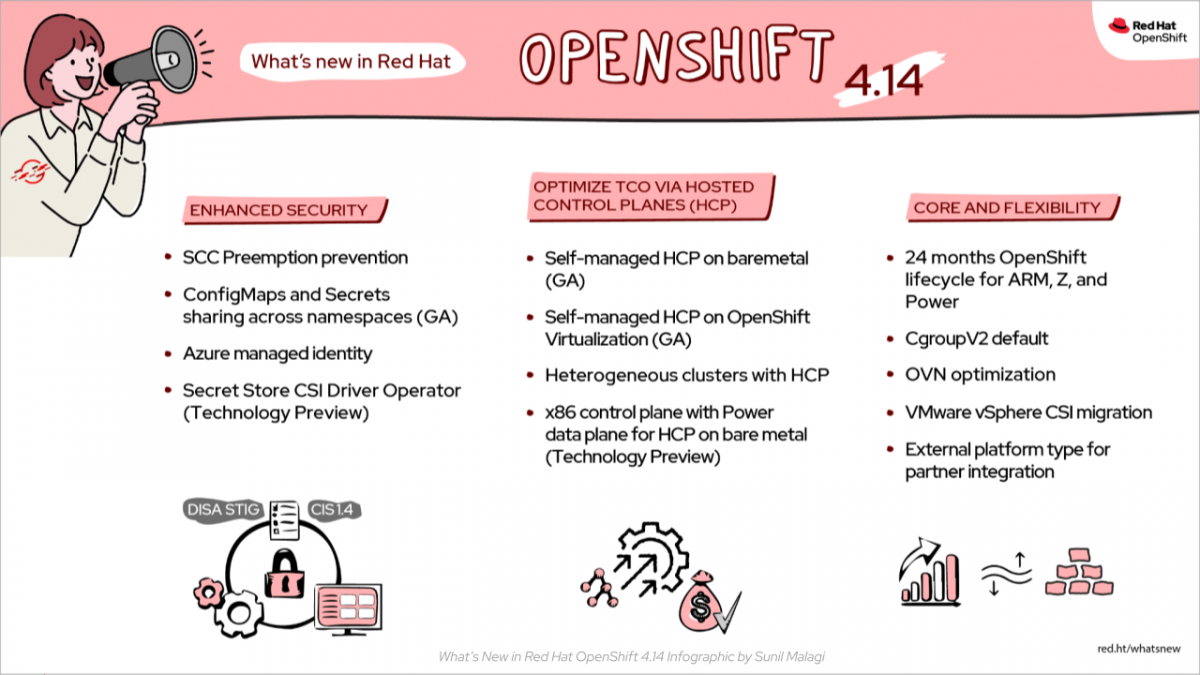
- Red Hat OpenShift Container Platform 4.14
- Red Hat OpenShift Container Platform 4.13
- Red Hat OpenShift Container Platform 4.12
- Red Hat OpenShift Container Platform 4.11
- Red Hat OpenShift Container Platform 4.10
- Red Hat OpenShift Container Platform 4.9
What's new in Red Hat OpenShift Container Platform
Red Hat OpenShift is a Kubernetes-based app dev platform that enables developers to build, deploy, and manage containerized applications. It provides a comprehensive set of tools and services for developers, operations teams, and IT organizations to streamline application development and delivery. Red Hat OpenShift version 4.18, based on Kubernetes 1.31 and CRI-O 1.31, is now generally available. Here are some important features available in OpenShift 4.18.
To learn about additional updates see : What's new in Red Hat OpenShift 4.18.
New capabilities to improve developer productivity
Use the Developer Console to discover Red Hat Developer tools. In the Developer Console, you can now find odo, accessing the Terminal step of the Guided Tour; OpenShift IDE extensions, VSCode Knative IDE and IntelliJ Knative Plugin, using the Create Serverless form; and discover Red Hat OpenShift Dev Spaces. There are also two new Quick Starts available: Installing Cryostat Operator and Get started with JBoss EAP using a Helm Chart.
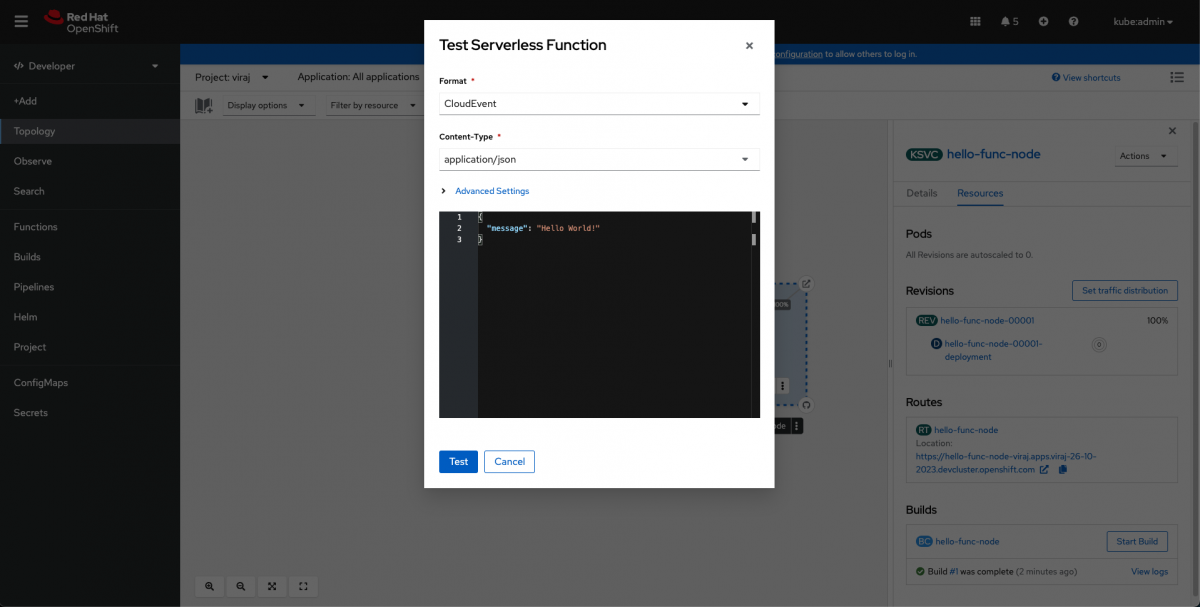
Serverless Function samples have been added to the sample catalog, and you can now test your serverless functions after they have been deployed.
OpenShift Pipelines 1.17 based on Tekton
Tekton Chains OpenShift Pipelines is a cloud-native continuous integration and continuous delivery (CI/CD) It automates deployments using Tekton building blocks across multiple platforms by removing the hidden implementation details. OpenShift Pipelines provide an integrated user experience with the developer perspective of the Red Hat OpenShift Container Platform web console. Release 1.17 you can add multiple configurations from the same Git provider or configure multiple Git providers using the Git resolver in the TektonConfig custom resource (CR). Use the configKey parameter to select a Git configuration for task and pipeline runs. Red Hat OpenShift Pipelines release notes
OpenShift GitOps 1.15 based on Argo CD 2.13
OpenShift GitOps Red Hat OpenShift GitOps 1.15 is based on Argo CD 2.13 and Argo Rollouts 1.7.2. OpenShift GitOps provides a declarative way to implement continuous delivery of applications across clusters and development lifecycles. With the 1.15 release, multi-source applications is GA. This feature provides access to revision history and rollback to a specific version. The new sources tab displays all source parameters. In addition, users can now see a resource’s associated rollout in the Argo CD dashboard with the addition of the Argo CD extension.
OpenShift GitOps 1.15 release notes.
OpenShift Serverless 1.35 based on Knative 1.15
OpenShift Serverlessprovides autoscaling and networking for containerized microservices and functions. Go functions using S2I builder are now GA for developers to implement and build Go functions on Mac and Linux platforms.
Serverless logic integrates with Prometheus and Grafana to provide enhanced monitoring support. It also supports configuring the Knative Eventing system to produce and consume events for workflows and supporting services.
Enhancements in autoscaling for Knative Kafka subscriptions with Kubernetes Event Driven Autoscaling (KEDA) is in Technology Preview. Autoscaling with CMA/KEDA optimizes resource allocation for Kafka triggers and KafkaSource objects and boosts performance in event-driven workloads by enabling dynamic scaling of Kafka consumer resources. To learn more, please see the OpenShift Serverless 1.35 release notes.
OpenShift Service Mesh 3.0 based on Istio 1.24 and Kiali 2.1
Red Hat OpenShift Service Mesh 3.0 is based on Istio 1.24 and Kiali 2.1. OpenShift Service Mesh creates a central point of control in an application. OpenShift Service Mesh 3.0 will be GA shortly after the OpenShift 4.18 release. It is managed by the Sail Operator based on Istio.
New features include: Support for canary control plane upgrades, which is safer for in-place upgrades, Multi-cluster topologies, Istio’s command line utility, is available.
You can find more information in the OpenShift Service Mesh release notes.
Red Hat OpenShift Container Platform 4.18
- Red Hat unveils OpenShift 4.18: Enhanced security and virtualization experience
- Slides
- YouTube video link
Red Hat OpenShift Container Platform 4.17
Red Hat OpenShift Container Platform 4.16
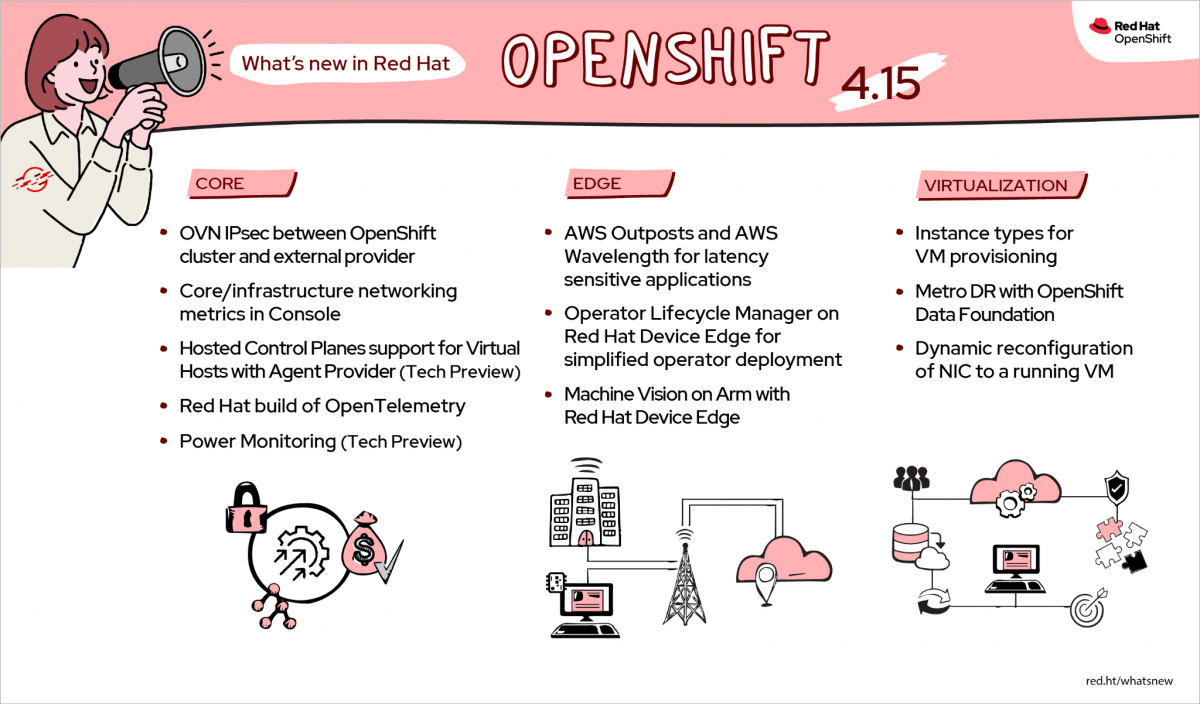
Red Hat OpenShift Container Platform 4.15
Red Hat OpenShift Container Platform 4.14
- What’s new in Red Hat OpenShift Monitoring 4.14, Logging 5.8, and Distributed Tracing 2.9?
- Slides
- YouTube video link
Red Hat OpenShift Container Platform 4.13
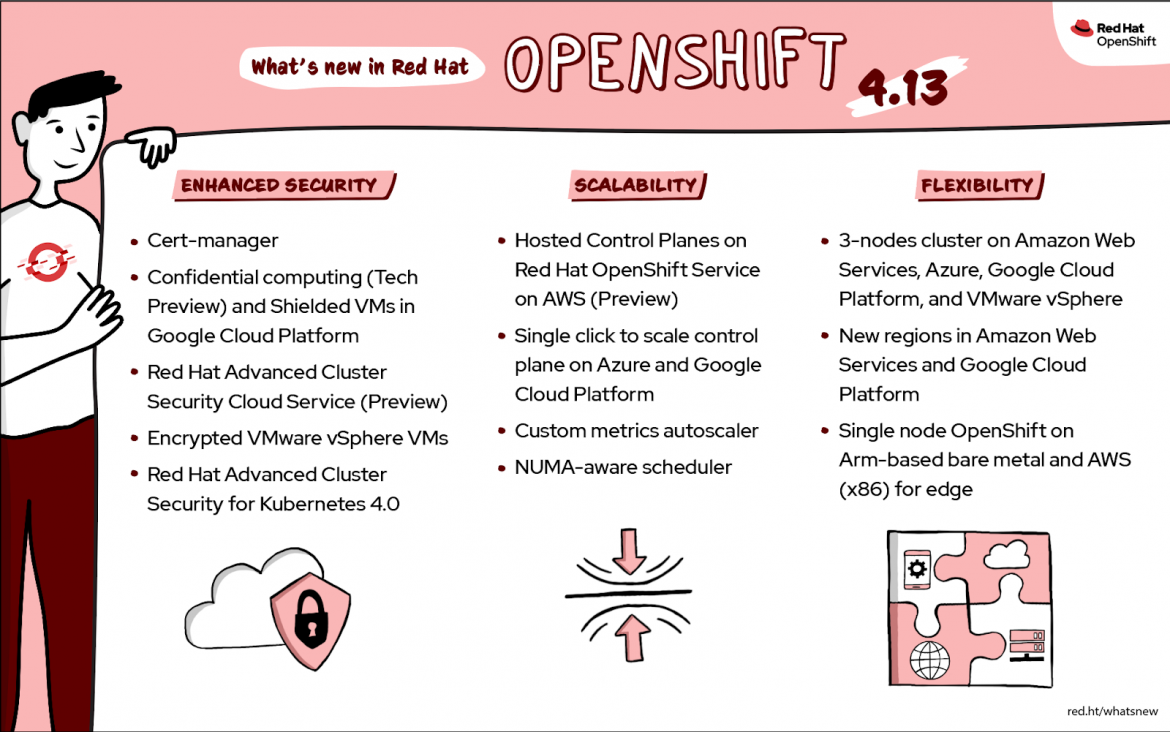
- Everything you need to know about Red Hat OpenShift 4.13
- What’s new in Red Hat OpenShift Monitoring 4.13, Logging 5.7, and Distributed Tracing 2.8?
- Red Hat OpenShift 4.13: All the links and blogs in one place
- Slides
- YouTube video link
Red Hat OpenShift Container Platform 4.12
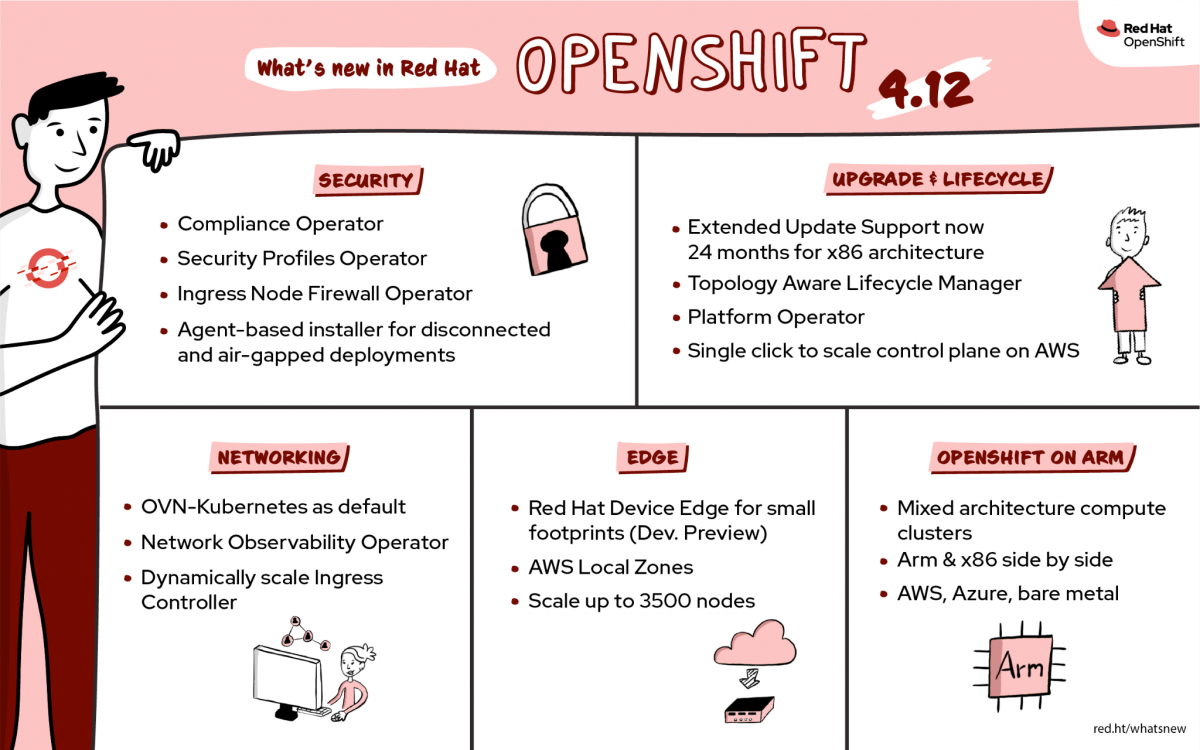
- What's New in Red Hat OpenShift 4.12?
- What’s New in Red Hat OpenShift Monitoring 4.12 & Logging 5.6?
- Slides
- YouTube video link
Red Hat OpenShift 4.11 Container Platform
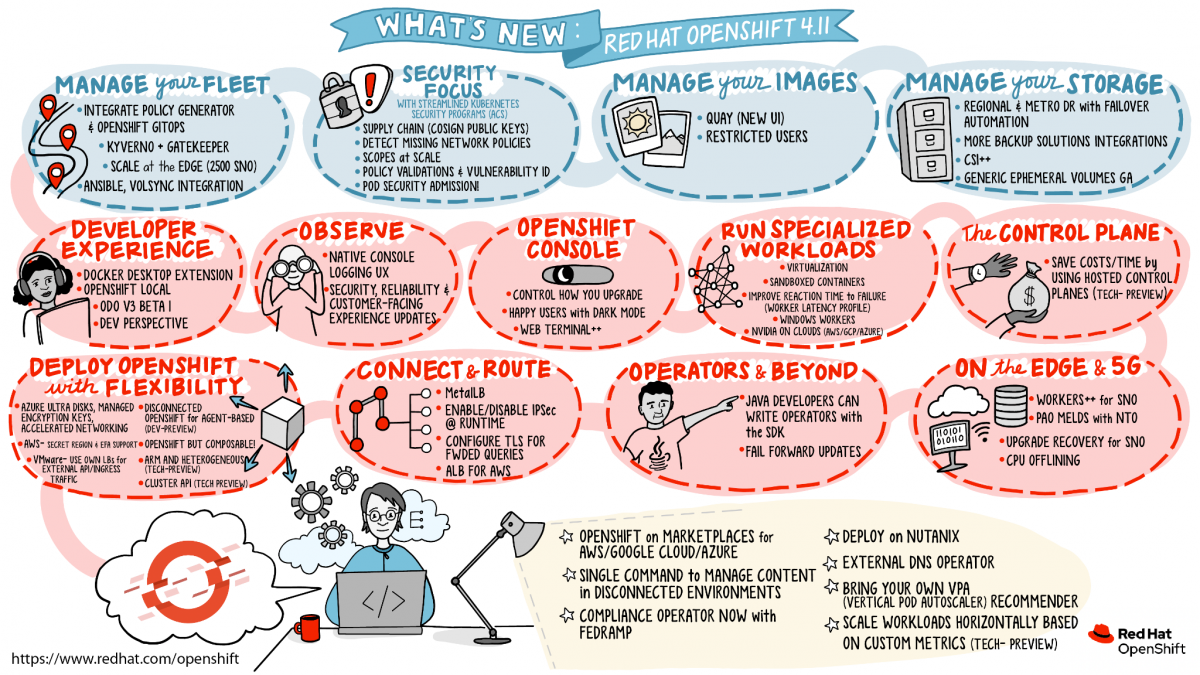
- What’s New in Red Hat OpenShift 4.11
- A Wrap Up of OpenShift 4.11's New Features
- Slides
- YouTube Video Link
Red Hat OpenShift 4.10 Container Platform
- New in Red Hat OpenShift 4.10: Technology Preview of cert-manager
- Operator for Red Hat OpenShift 4.10
- Introducing Red Hat OpenShift 4.10
- Red Hat OpenShift and IBM Cloud

Comments